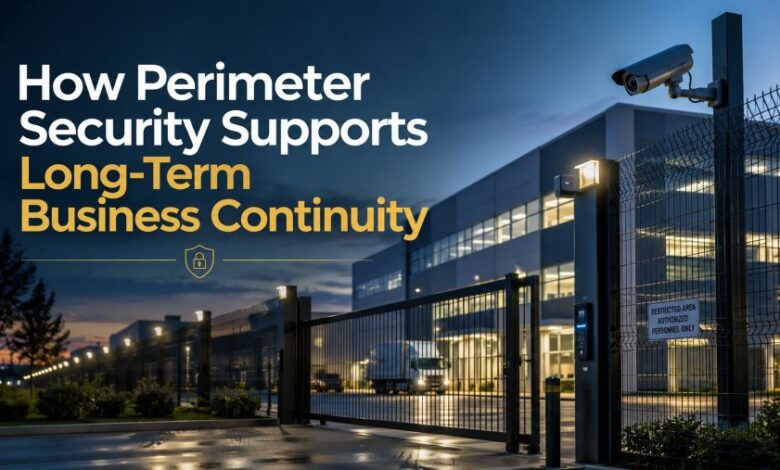
Business continuity is often associated with backup systems, insurance, emergency planning, and supply chain management. However, physical security is equally important. A single perimeter breach can interrupt production, damage valuable equipment, expose sensitive information, or create safety risks for employees.
Effective perimeter security helps businesses detect threats before they reach critical buildings, storage areas, data systems, or production lines. By creating an early warning layer around a site, companies can respond more quickly and reduce the operational impact of intrusion, vandalism, theft, and sabotage.
Preventing Disruptions Before They Reach Core Operations
Traditional security often focuses on doors, windows, and indoor alarm systems. These measures are important, but they may only detect a threat after an intruder has already entered the main facility.
Perimeter protection moves detection farther away from critical assets. Sensors installed on fences, walls, gates, underground boundaries, or open areas can identify suspicious activity at an earlier stage.
This additional response time allows security teams to assess the situation, verify the alarm, contact emergency services, and protect employees before the incident develops into a major business interruption.
Protecting Valuable Equipment and Materials
Manufacturing plants, logistics centers, energy facilities, and warehouses often store expensive machinery, vehicles, raw materials, fuel, and finished goods. Theft or deliberate damage can stop operations for days or even weeks.
Replacing specialized components may be especially difficult when spare parts must be imported or custom manufactured. Even a relatively small act of vandalism can cause significant losses if it affects a critical production system.
A well-designed perimeter security system reduces unauthorized access and makes it harder for intruders to approach high-value assets unnoticed. Visible security measures can also discourage opportunistic theft before an incident occurs.
Supporting Employee and Contractor Safety
Business continuity depends on people as much as equipment. Employees must be able to work in a safe environment without facing avoidable security threats.
Unauthorized individuals entering industrial sites may encounter high-voltage equipment, moving machinery, chemicals, heavy vehicles, or restricted production areas. These intrusions create risks for both the intruder and site personnel.
Early perimeter detection gives security teams more time to isolate the affected area and guide employees away from danger. It can also support safer management of contractors, delivery vehicles, and temporary workers entering controlled zones.
Reducing False Alarms and Unnecessary Responses
A security system that generates frequent false alarms may gradually lose the trust of operators. Security staff may respond more slowly, ignore repeated warnings, or spend excessive time checking harmless events.
Modern perimeter protection can combine intelligent detection, zone-based monitoring, alarm verification, and environmental filtering. These functions help distinguish genuine intrusion behavior from wind, rain, animals, vegetation movement, and nearby traffic.
Businesses should evaluate perimeter intrusion detection system manufacturers based on detection accuracy, environmental adaptability, integration capability, technical support, and long-term maintenance requirements rather than purchase price alone.
Reliable alarm performance helps security teams focus on real risks while reducing unnecessary patrols and operational interruptions.
Maintaining Supply Chain Reliability
A security incident at one facility can affect customers, distributors, suppliers, and logistics partners. For example, damage to a warehouse may delay deliveries, while theft from a production plant may reduce available inventory.
Sites handling food, pharmaceuticals, electronics, automotive components, or energy materials may face additional compliance and traceability requirements. Unauthorized access can create questions about product integrity, contamination, or chain of custody.
Perimeter security helps protect storage and loading areas while supporting controlled movement around the facility. This protection contributes to more reliable delivery schedules and stronger customer confidence.
Protecting Data Centers and Critical Infrastructure
Modern businesses depend heavily on digital systems. Data centers, communication hubs, power facilities, and control rooms support daily operations across many industries.
An intrusion near these sites can damage cables, power supplies, cooling systems, network equipment, or backup generators. Even when no information is stolen, physical damage may cause costly outages.
Perimeter monitoring can provide continuous protection around large or remote facilities where guards cannot observe every area at the same time. When combined with video surveillance and access control, the system can automatically direct cameras toward the alarm location and provide more information to security personnel.
Improving Emergency Response Coordination
During an incident, clear information is essential. Security teams need to know where the event occurred, what type of activity triggered the alarm, and which assets may be at risk.
Zone-based perimeter systems can divide a large site into manageable sections. Accurate alarm location helps responders reach the correct area quickly instead of searching the entire boundary.
The security system can also be integrated with video surveillance, lighting, public address systems, access control, and central management software. This coordinated approach improves situational awareness and supports faster decision-making during emergencies.
Supporting Insurance and Risk Management
Businesses are increasingly expected to demonstrate that they have identified and controlled foreseeable risks. Insurers, customers, investors, and regulators may review physical security arrangements when assessing operational resilience.
Documented security procedures, system maintenance records, alarm reports, and response plans can show that the company takes risk management seriously. Although security cannot eliminate every threat, it can reduce the likelihood and potential impact of an incident.
Improved protection may also support insurance discussions, contract requirements, and internal business continuity audits.
Adapting Security as the Business Grows
Business sites change over time. Companies may build new warehouses, expand production lines, add outdoor storage, install solar power systems, or increase vehicle traffic.
A flexible perimeter solution should allow new zones, sensors, cameras, and control devices to be added without replacing the entire system. Scalability is particularly important for businesses planning long-term expansion.
Regular risk assessments should also be conducted as the site changes. A boundary that was once low risk may become more important after valuable assets or critical infrastructure are installed nearby.
Building Long-Term Operational Resilience
Perimeter security is not only about stopping intruders. It is an important part of a broader strategy for protecting people, assets, supply chains, information, and production capacity.
Early detection, accurate alarm location, reliable system integration, and well-trained response teams can prevent minor incidents from becoming major operational disruptions.
By investing in perimeter protection that matches the site’s risks and future development plans, businesses can strengthen resilience, maintain customer confidence, and support stable operations over the long term.