Bashar Alhafni: Remarkable Career in Arabic AI Research
Discover his age, Syrian background, education, MBZUAI role and work to improve Arabic language technology

Introduction
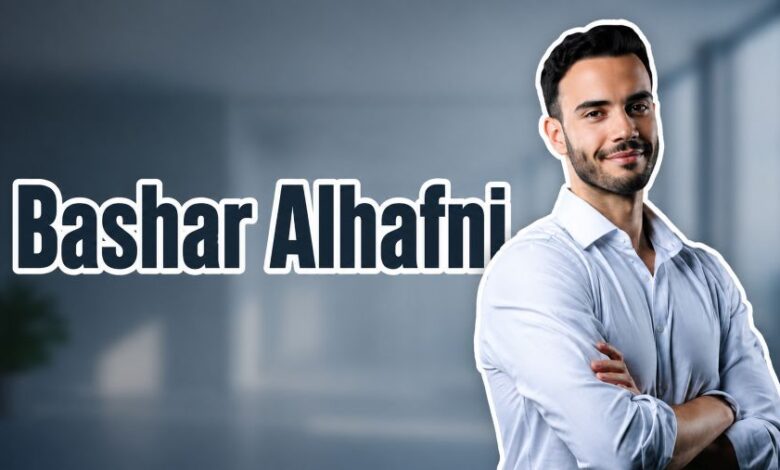
Bashar Alhafni is a Syrian-born computer scientist, university professor and artificial intelligence researcher. He specialises in natural language processing, commonly known as NLP.
He is an Assistant Professor of Natural Language Processing at the Mohamed bin Zayed University of Artificial Intelligence in Abu Dhabi. He also leads the Arabic AI Modeling Lab, known as the Aram Lab.
Bashar Alhafni is best known for developing human-centred AI systems that understand, correct, simplify and generate Arabic text.
Bashar Alhafni Quick Profile
| Detail | Verified information |
|---|---|
| Full name | Bashar Alhafni |
| Birth year | 1994 |
| Birthplace | Damascus, Syria |
| Age in July 2026 | About 31 or 32 |
| Profession | Computer scientist, professor and AI researcher |
| Current position | Assistant Professor of Natural Language Processing |
| University | Mohamed bin Zayed University of Artificial Intelligence |
| Research lab | Arabic AI Modeling Lab |
| Main research area | Arabic natural language processing |
| Bachelor’s degree | Computer Science with a Mathematics minor |
| Master’s degree | Computer Science |
| Doctoral degree | PhD in Computer Science |
| Known for | Arabic NLP, language generation and educational AI |
Who Is Bashar Alhafni?
Bashar Alhafni is an academic researcher working at the meeting point of artificial intelligence, computer science and language.
His main goal is to create AI systems that work better for Arabic speakers. His projects cover language correction, text simplification, machine translation, readability and personalised writing tools.
He works in Abu Dhabi, which has become an important centre for artificial intelligence, cloud technology and digital research. This growth is part of a wider story involving UAE businesses driving economic growth and innovation.
Unlike researchers who concentrate mainly on English-language technology, Alhafni studies the special structure of Arabic. Arabic includes many word forms, regional dialects and writing patterns that can be difficult for general AI models to process correctly.
Bashar Alhafni Age and Syrian Background
Bashar Alhafni was born in Damascus, Syria, in 1994. Based on his confirmed birth year, he is approximately 31 or 32 years old in July 2026.
His academic dissertation confirms both his year and place of birth. It also records his educational path through universities in the United States.
Alhafni later thanked his parents for their sacrifices and encouragement. He explained in his doctoral acknowledgements that their support helped him pursue a high-level education.
His journey took him from Damascus to Connecticut, California, New York and Abu Dhabi. Each step helped him build experience in software, language research and applied artificial intelligence.
Education and Academic Training
Alhafni studied at the University of Bridgeport in Connecticut. He completed a Bachelor of Science in Computer Science in 2017, with Mathematics as his minor subject.
He then attended the University of Southern California. He earned a Master of Science degree in Computer Science in 2019.
During his time at USC, he worked at the university’s Information Sciences Institute. His early research included low-resource machine translation and methods for understanding relationships between events in written stories.
In 2020, he began doctoral studies at New York University’s Tandon School of Engineering. His supervisor was Professor Nizar Habash, a recognised researcher in Arabic computational linguistics.
Alhafni completed his PhD in Computer Science in 2025. His dissertation was titled Controlled Natural Language Generation for Morphologically Rich Languages: The Case of Arabic.
The research examined how AI systems could generate more accurate Arabic while responding to a user’s needs, dialect and grammatical preferences.
From University Research to an AI Career
Alhafni developed his research career through a mixture of university work and industry experience.
At the USC Information Sciences Institute, he studied machine translation and event-relation extraction. This gave him experience in teaching computers to understand connections inside written language.
He later became a graduate research assistant at New York University Abu Dhabi. There, he joined the Computational Approaches to Modeling Language Lab, usually called CAMeL Lab.
His work at CAMeL Lab included multilingual NLP, Arabic language processing, grammatical correction and controlled text generation.
This combination of research and technical development connects with growing regional demand for AI products, cloud systems and custom software development in Dubai.
Dataminr and Grammarly Experience
In 2022, Alhafni completed a research internship at Dataminr in New York City.
He worked on extracting timelines from crisis reports and producing shorter summaries of important events. This work contributed to research on local crisis-event timeline extraction.
In 2023, he joined Grammarly in San Francisco as a research intern. His work included personalised text generation, multilingual text editing and the personalisation of large language models.
These positions allowed him to test academic ideas in real technology environments. His experience shows how language research can become practical tools for students, writers and businesses.
Joining MBZUAI
Alhafni joined the Mohamed bin Zayed University of Artificial Intelligence in 2025 as an Assistant Professor of Natural Language Processing.
According to his official MBZUAI faculty profile, his work includes Arabic grammatical-error correction, dialect normalisation, text simplification, readability assessment, machine translation and controlled language generation.
MBZUAI is based in Abu Dhabi and focuses fully on artificial intelligence education and research.
Alhafni’s appointment placed him inside one of the region’s leading AI research environments. The UAE is also building other research ecosystems, including the Sharjah Research, Technology and Innovation Park.
The Arabic AI Modeling Lab
At MBZUAI, Alhafni directs the Arabic AI Modeling Lab, commonly called the Aram Lab.
The laboratory studies how language structure affects the behaviour of artificial intelligence models. It also develops tools that can improve Arabic education and communication.
Its research is human-centred. This means the technology is designed around the needs of real people rather than focusing only on technical scores.
The lab brings together doctoral students, master’s students, researchers and engineers. Their work aims to make Arabic AI more accurate, accessible and useful.
Bashar Alhafni Research Areas
Arabic grammatical-error correction
Alhafni has worked on systems that identify and correct errors in Arabic writing.
His research has produced strong results across several Arabic correction datasets. Some of his newer text-editing models are also designed to work faster than earlier systems.
Controlled natural-language generation
Controlled generation allows a user or developer to guide how an AI system writes.
Instead of producing a general answer, a controlled model may adjust its wording according to dialect, grammatical form, writing level or another selected condition.
Dialectal Arabic normalisation
Arabic dialects are widely spoken and increasingly used in online writing. However, their spelling is not always standardised.
Alhafni has studied methods for normalising written Arabic dialects. His research has covered Egyptian, Moroccan, Palestinian, Saudi and Syrian Arabic.
Arabic text simplification
Text simplification makes difficult writing easier to understand.
Alhafni contributed to research resources designed to simplify Arabic for school-aged learners. This can support children, language learners and readers who need clearer text.
Readability assessment
Readability systems estimate how easy or difficult a word, sentence or passage may be.
Such tools can help teachers select suitable reading materials and allow educational software to match text with a learner’s ability.
User-aware text rewriting
His research has also explored systems that rewrite Arabic text according to selected grammatical-gender forms.
The focus is on grammatical language structure and user control. The system can change words so that generated text matches the form chosen by the user.
A record of his published conference papers and research projects can be found through the ACL Anthology.
ARWI: Arabic Write and Improve
One of Alhafni’s notable projects is ARWI, meaning Arabic Write and Improve.
ARWI is an intelligent writing assistant created to help learners improve their Arabic writing. It can support users by identifying language problems and guiding them towards clearer text.
The project received a diversity award at the 2025 Workshop on Intelligent and Interactive Writing Assistants.
While artificial intelligence is widely used in fields such as AI-powered digital marketing, Alhafni’s work demonstrates how the same broad technology can support education and language learning.
Awards and Research Recognition
Alhafni’s Arabic writing project received the ARWI Diversity Award in 2025.
In January 2026, he announced that his team had won the best-system award in the AMIYA shared task at VarDial 2026. The task focused on adapting open-source language models for dialectal Arabic generation.
His research has appeared at major language-technology conferences, including ACL, EMNLP, NAACL, EACL and LREC-COLING.
His publication topics include Arabic grammatical correction, text simplification, dialect processing, educational AI, multilingual editing and large language models.
Current Work in 2026
As of July 2026, Bashar Alhafni remains an Assistant Professor at MBZUAI and the director of the Aram Lab.
His 2026 activities include research on Arabic-English language benchmarks, authorship analysis, Judeo-Arabic transliteration and the effect of Arabic diacritics on large language models.
He has also helped organise shared tasks covering Arabic sentence segmentation and readability assessment.
His work concentrates mainly on written language and education. This differs from visual generative platforms such as Krea AI, which are designed mainly for creating and editing images and videos.
Why His Research Matters
Many leading AI models are trained on much more English content than Arabic content.
This can cause weaker results when an AI system reads Arabic dialects, corrects Arabic writing or generates text with complex grammatical forms.
Alhafni’s research addresses these gaps by building datasets, models and open-source tools for Arabic.
The same research questions are relevant to multilingual countries, including New Zealand. They show why AI developers must consider languages with smaller digital datasets rather than building every system mainly around English.
Frequently Asked Questions
Who is Bashar Alhafni?
He is a Syrian-born computer scientist, Arabic NLP researcher and Assistant Professor at MBZUAI.
What is Bashar Alhafni’s age?
He was born in 1994, making him approximately 31 or 32 years old in July 2026.
Where was Bashar Alhafni born?
He was born in Damascus, Syria.
What does Bashar Alhafni do?
He develops artificial intelligence systems for Arabic text generation, correction, simplification and language education.
Where does Bashar Alhafni work?
He works at the Mohamed bin Zayed University of Artificial Intelligence in Abu Dhabi.
What did Bashar Alhafni study?
He studied Computer Science at the University of Bridgeport, USC and New York University.
What is the Aram Lab?
The Arabic AI Modeling Lab is an MBZUAI research group led by Alhafni.
What is Bashar Alhafni known for?
He is known for Arabic NLP, controlled language generation, grammatical-error correction and educational AI.
Conclusion
Bashar Alhafni has built a research career focused on making artificial intelligence more useful for Arabic speakers.
From his early education in computer science to his doctoral research at NYU and current leadership role at MBZUAI, his work has remained closely connected to language technology.
His research on writing assistance, Arabic dialects, text correction and educational AI is helping expand the digital resources available for one of the world’s most widely spoken languages.