Mukund Varadarajan Biography: 11 Inspiring Facts About the Ashoka Chakra Hero
Last Updated: June 19, 2026

Introduction
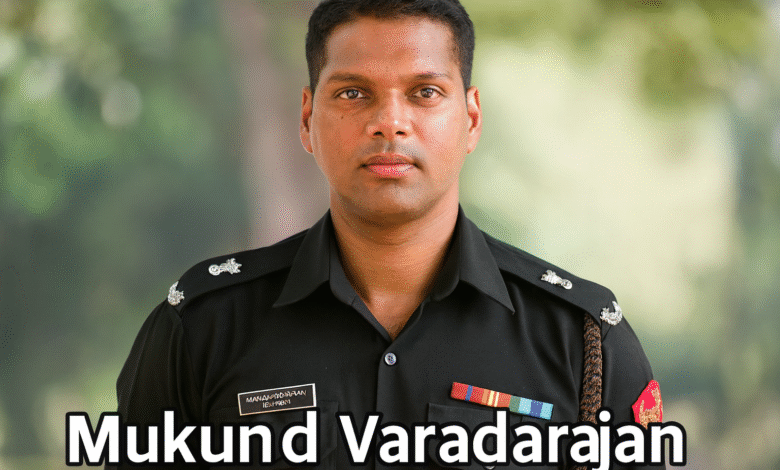
The Mukund Varadarajan biography tells the story of an Indian Army officer remembered for courage, leadership and devotion to duty. He served in the Rajput Regiment and later joined the 44th Battalion of the Rashtriya Rifles on deputation in Jammu and Kashmir.
His life included a normal childhood, college education, a brief private-sector job and a long-held ambition to wear the military uniform. After training at the Officers Training Academy in Chennai, he developed into a respected infantry officer who served in India and on a United Nations peacekeeping mission in Lebanon.
Major Mukund lost his life on 25 April 2014 while leading a counter-terrorism operation in Qazipathri village in Shopian district. His actions during the mission earned him the Ashoka Chakra, India’s highest peacetime gallantry award.
His biography represents service-led leadership in the same way that demanding national missions shaped the career of Sultan Al Neyadi. Both stories show how training, calm decision-making and a sense of national responsibility can create a lasting public legacy.
Quick Answer: Major Mukund Varadarajan was an Indian Army officer who served with 22 Rajput and 44 Rashtriya Rifles. He was killed in action during a counter-terrorism mission in Shopian on 25 April 2014 and received the Ashoka Chakra posthumously.
Mukund Varadarajan Quick Biography
| Biography Detail | Verified Information |
|---|---|
| Full Name | Mukund Varadarajan |
| Military Title | Major |
| Honour | Ashoka Chakra |
| Date of Birth | 12 April 1983 |
| Reported Birthplace | Kozhikode district, Kerala, India |
| Raised In | Tambaram, Chennai, Tamil Nadu |
| Nationality | Indian |
| Profession | Indian Army officer |
| Service Number | IC-72861M |
| Regiment | 22 Rajput Regiment |
| Deputation | 44 Rashtriya Rifles |
| Military Training | Officers Training Academy, Chennai |
| Education | Bachelor of Commerce and Diploma in Journalism |
| Years of Service | 2006–2014 |
| Wife | Indhu Rebecca Varghese |
| Children | One daughter |
| Date of Death | 25 April 2014 |
| Place of Final Mission | Qazipathri, Shopian district, Jammu and Kashmir |
| Age at Death | 31 |
| Famous For | Courage during the Qazipathri counter-terrorism operation |
Who Was Major Mukund Varadarajan?
Major Mukund Varadarajan was a commissioned infantry officer in the Indian Army.
He belonged to the 22 Rajput Regiment and later served with the 44th Battalion of the Rashtriya Rifles. The Rashtriya Rifles carries out counter-insurgency and counter-terrorism duties in Jammu and Kashmir.
Mukund became nationally known after his final military operation in April 2014. He led his team under heavy fire and continued the mission despite suffering serious injuries.
The operation ended with the elimination of three armed militants. However, Major Mukund and Sepoy Vikram Singh also lost their lives.
The Indian government honoured Mukund with the Ashoka Chakra for his leadership, planning, courage and supreme sacrifice.
His life story is now studied not only as a military biography but also as an example of responsible leadership under extreme pressure.
Early Life and Childhood
Birth and Chennai Upbringing
Mukund Varadarajan was born on 12 April 1983.
Several published biographies identify Kozhikode district in Kerala as his birthplace. His family roots were connected with Paruthipattu near Avadi, and he spent much of his childhood in Tambaram, Chennai.
His parents were R. Varadarajan and Geetha Varadarajan. His father worked in banking and later retired as a bank manager.
Mukund was the youngest of three children and grew up with two elder sisters.
His childhood was not built around public attention or military fame. He lived a largely ordinary family life and attended school in the Chennai area.
Early Interest in the Armed Forces
Mukund reportedly expressed a wish to join the defence forces when he was still a young child.
Members of his extended family had served in the military, giving him early exposure to the ideas of discipline, uniformed service and national duty.
His father later remembered that Mukund remained focused on this ambition even when other professional options became available.
This determination became an important part of the Mukund Varadarajan life story. His military career was not a sudden decision taken after college. It developed from an interest he had carried for many years.
His biography is different from an entrepreneurial success journey such as that of Rizwan Sajan, yet both stories demonstrate how a clear purpose can guide a person through difficult choices and uncertain beginnings.
Education and College Life
Mukund completed a Bachelor of Commerce degree from Sri Chandrasekharendra Saraswathi Viswa Mahavidyalaya in Kanchipuram.
He later studied journalism at Madras Christian College in Chennai. His diploma gave him experience in communication, writing and understanding public events.
The combination of commerce and journalism may appear unusual for a future Army officer. However, both subjects could support useful military skills.
Commerce develops analytical thinking and an understanding of organisation. Journalism encourages clear communication, observation and the ability to collect information.
Mukund also formed important personal friendships during his college years. His future wife, Indhu Rebecca Varghese, was connected with his Madras Christian College period.
Brief Private-Sector Career
Before joining the Indian Army, Mukund worked briefly at a call centre or business process outsourcing company.
His father had encouraged him to consider further academic study, including an MBA. Mukund, however, remained committed to his childhood ambition of entering the armed forces.
The call-centre position became only a short stage in his professional biography.
He later cleared the required military selection process and entered officer training.
This part of his life makes his journey relatable. He did not move directly from childhood into a celebrated military career. He experienced college, ordinary employment and uncertainty before finding the path he wanted to follow.
Officers Training Academy
Mukund trained at the Officers Training Academy in Chennai.
OTA prepares men and women for commissioned leadership roles in the Indian Army. Training covers physical fitness, weapons, fieldcraft, military planning, discipline and command responsibility.
The programme also tests whether a candidate can remain calm, make decisions and lead others under difficult conditions.
Mukund completed his training and was commissioned into the 22 Rajput Regiment on 18 March 2006.
His transition from a civilian graduate to a commissioned officer marked the beginning of an eight-year military career.
The discipline associated with officer training also connects with other forms of demanding public leadership. Profiles such as Noura Al Kaabi show that national service, although performed in a different field, also requires responsibility, preparation and steady decision-making.
Indian Army Career
Commissioned Into 22 Rajput
Mukund began his Army service as a lieutenant in the Rajput Regiment.
The Rajput Regiment is one of the Indian Army’s long-established infantry regiments. Infantry officers are expected to lead soldiers directly during field operations and difficult deployments.
His early assignments helped him develop practical leadership experience.
Published accounts state that he served in different locations, including Jammu and Kashmir. He was also associated with the Infantry School at Mhow, where he worked in an instructional role.
Teaching at an infantry institution would have required strong technical knowledge, communication and professional confidence.
United Nations Mission in Lebanon
Mukund also served as part of a United Nations peacekeeping mission in Lebanon.
Peacekeeping duties differ from normal domestic military deployments. Soldiers may work in an international environment involving local communities, foreign military units and complex security conditions.
Such service requires restraint and communication as well as military readiness.
His Lebanon deployment added an international stage to his Army career and gave him experience beyond India.
It also demonstrated that his military service involved more than combat. Peacekeeping includes observation, protection duties, coordination and efforts to maintain stability.
Promotion to Captain and Major
Mukund received increasing responsibility as his career progressed.
He was promoted to captain in 2011 and later to major in October 2012.
A major may lead important operations, manage personnel and make tactical decisions affecting an entire team.
By this stage, Mukund had gained experience in infantry duties, instruction and international peacekeeping.
In December 2012, he was deputed to the 44th Battalion of the Rashtriya Rifles in Shopian district.
Service With 44 Rashtriya Rifles
The Rashtriya Rifles specialises in counter-insurgency duties in Jammu and Kashmir.
Its personnel often operate in areas where armed groups may move among civilian populations. Missions require careful intelligence, coordination and efforts to protect local residents.
Mukund’s unit was responsible for operations in and around Shopian.
Published accounts of his service describe his involvement in a difficult 2013 encounter after an Army convoy came under attack. The operation strengthened his reputation as an officer willing to lead from the front.
He also worked within an environment where intelligence gathering and communication analysis were important.
His time with 44 Rashtriya Rifles prepared him for the mission that later resulted in the Ashoka Chakra.
The Qazipathri Operation
Intelligence and Search Mission
On 25 April 2014, the Army received information about armed militants hiding in Qazipathri village in Shopian district.
The group was linked with violence during the 2014 election period. Their presence created a threat to security personnel, election workers and civilians.
Major Mukund led his team in a cordon-and-search operation.
A cordon is used to prevent armed suspects from escaping an area, while the search team identifies their exact position and works to end the threat.
The operation required careful movement because the militants were hiding inside a built-up location surrounded by civilian property.
Heavy Gunfire
Mukund’s team came under heavy fire during the search.
The official award citation states that he demonstrated planning, rapid action and exemplary leadership during the encounter.
He personally led the assault and continued moving forward even after being injured.
His team successfully neutralised all three militants involved in the confrontation.
Sepoy Vikram Singh fought alongside Mukund and also lost his life during the mission. He was later awarded the Shaurya Chakra posthumously.
Major Mukund’s Death
Mukund suffered multiple gunshot injuries during the operation.
He was evacuated for medical treatment but died from his wounds while being transported.
He was 31 years old.
His death came less than two weeks after his birthday and shortly before a planned period of leave with his family.
His mortal remains were taken to Chennai, where he received full military honours.
The loss affected his family, fellow soldiers and the wider community in Tambaram.
Ashoka Chakra Award
The Ashoka Chakra is India’s highest peacetime gallantry decoration.
It recognises exceptional bravery, daring action or self-sacrifice away from a formally declared battlefield.
The Government of India announced the award for Major Mukund Varadarajan on 15 August 2014.
The official Gallantry Awards record confirms his rank, service number, Army unit and posthumous Ashoka Chakra honour.
His citation praised his leadership, courage, planning and swift action during the Qazipathri operation.
The Press Information Bureau’s official award announcement recorded that the operation resulted in the elimination of three high-ranking militants.
On 26 January 2015, President Pranab Mukherjee presented the award to Mukund’s wife during the Republic Day ceremony in New Delhi.
The correct timeline is therefore:
- Award announced: 15 August 2014
- Award presented to his wife: 26 January 2015
Wife and Family Life
Mukund married Indhu Rebecca Varghese in 2009.
They had known each other from their college period and shared a relationship before his final military posting.
The couple had one daughter.
Although his military responsibilities took him away from home, family accounts describe him as a caring husband, father and son.
He reportedly avoided discussing the most dangerous parts of his work because he did not want his family to remain worried.
Before his final mission, he had been planning leave so he could support his daughter during a medical procedure.
Indhu later received the Ashoka Chakra on his behalf and became an important guardian of his memory.
Her public message has often focused on remembering Mukund as a complete human being rather than only through the sadness of his death.
Leadership Qualities
Leading From the Front
Mukund’s final operation showed his willingness to accept the same dangers faced by his soldiers.
He did not remain at a safe distance while directing others. He entered the operational area and personally took part in the assault.
This behaviour strengthened trust between the officer and his team.
Calm Decision-Making
Counter-terrorism operations can change within seconds.
An officer must understand intelligence, protect civilians, direct soldiers and respond to enemy fire at the same time.
Mukund’s award citation highlighted his planning and swift action, showing that his courage was supported by professional judgement.
Responsibility Toward His Team
Leadership in the armed forces is not based only on rank.
An officer is responsible for training, morale, safety and mission success.
Published accounts show that Mukund gave importance to the contribution of younger soldiers and recognised the risks they shared.
Humility
Family and military accounts describe him as someone who did not search for personal fame.
He treated military service as his chosen profession and duty.
This combination of competence and humility explains why his colleagues continued to speak about him with respect after his death.
Amaran and the True Story
The Tamil film Amaran was released in 2024 and brought the Mukund Varadarajan biography to a much larger audience.
Sivakarthikeyan portrayed Major Mukund, while Sai Pallavi played Indhu Rebecca Varghese. Rajkumar Periasamy directed the film.
The story drew material from India’s Most Fearless: True Stories of Modern Military Heroes by Shiv Aroor and Rahul Singh.
The film explored Mukund’s education, relationship, military training, family life and final operation.
However, viewers should remember that a feature film uses dramatic structure, recreated dialogue and compressed events.
Official military records and government award citations remain the strongest sources for factual details about his service.
The popularity of Amaran showed the power of personal storytelling. Public communicators such as Khalid Al Ameri have similarly demonstrated how emotional human stories can help audiences understand cultures, families and individual experiences.
Memorials and Legacy
OTA Memorial
A bust of Major Mukund Varadarajan was unveiled at the Officers Training Academy in Chennai in 2015.
The memorial stands in the institution where he prepared for his Army career.
It allows new officer cadets to learn about his actions and understand the responsibilities that come with military leadership.
Films and Books
His story appeared in military writing before Amaran reached cinemas.
The book India’s Most Fearless gave readers a detailed account of the operation and the people behind it.
The Malayalam film Picket 43 was also dedicated to his memory.
These works helped preserve his biography beyond official military records.
Major Mukund Varadharajan Road
In June 2026, the Tambaram Corporation Council approved a proposal to rename the 16-kilometre Velachery–Tambaram High Road in his honour.
The road is set to be known as Major Mukund Varadharajan Road.
The decision carries special meaning because the route passes through the wider Chennai area where he grew up and where his family lived.
Naming an important public road after him gives his memory a permanent place in the daily life of the city.
Continuing Inspiration
Mukund’s story continues to inspire soldiers, students and families.
His legacy is based on more than the circumstances of his death. It includes his education, long-held ambition, professional preparation, love for family and treatment of the soldiers around him.
Readers exploring the site’s wider biography collection will find many forms of achievement, but Mukund’s life remains distinctive because his highest recognition came from service and sacrifice rather than wealth or commercial success.
Major Mukund Varadarajan Career Timeline
| Year | Life and Military Milestone |
|---|---|
| 1983 | Born on 12 April |
| Childhood | Raised mainly in the Tambaram area of Chennai |
| College Years | Completed commerce studies and a journalism diploma |
| Early Career | Worked briefly in a call centre |
| Pre-2006 | Trained at the Officers Training Academy in Chennai |
| 2006 | Commissioned into 22 Rajput on 18 March |
| Later Service | Served at the Infantry School in Mhow |
| International Duty | Joined a United Nations peacekeeping mission in Lebanon |
| 2011 | Promoted to captain |
| 2012 | Promoted to major and deputed to 44 Rashtriya Rifles |
| 2013 | Took part in a major counter-terrorism encounter in Shopian |
| 2014 | Led the Qazipathri operation and died on 25 April |
| August 2014 | Ashoka Chakra announced posthumously |
| January 2015 | His wife received the award from the President of India |
| June 2015 | Bust unveiled at OTA Chennai |
| 2024 | Amaran released in cinemas |
| June 2026 | Road-renaming proposal approved in Chennai |
11 Interesting Facts About Mukund Varadarajan
- He expressed a wish to join the armed forces during childhood.
- He studied commerce before completing a diploma in journalism.
- He briefly worked in a call centre before entering military training.
- He trained at the Officers Training Academy in Chennai.
- He was commissioned into the 22 Rajput Regiment in 2006.
- He served as an instructor at the Infantry School in Mhow.
- His military career included a United Nations mission in Lebanon.
- He became a major in 2012.
- He served with 44 Rashtriya Rifles in Shopian.
- He received India’s highest peacetime gallantry award posthumously.
- A major Chennai road is being renamed in recognition of his service.
Frequently Asked Questions
Who was Major Mukund Varadarajan?
He was an Indian Army officer who served with 22 Rajput and 44 Rashtriya Rifles.
When was Mukund Varadarajan born?
He was born on 12 April 1983.
Where did he grow up?
He spent much of his childhood and early life in Tambaram, Chennai.
What did Mukund Varadarajan study?
He completed commerce studies and earned a diploma in journalism.
Who was Mukund Varadarajan’s wife?
He was married to Indhu Rebecca Varghese.
How did Major Mukund Varadarajan die?
He died from injuries received during a counter-terrorism operation in Shopian on 25 April 2014.
Which award did he receive?
He was posthumously awarded the Ashoka Chakra.
Is Amaran based on his real life?
Yes, the 2024 Tamil film is based on his life, Army career and relationship with his family.
Conclusion
The Mukund Varadarajan biography is the story of an ordinary student who followed an extraordinary sense of duty.
He studied commerce and journalism, worked briefly in the private sector and then pursued the military career he had wanted since childhood.
His Army journey took him through the Rajput Regiment, the Infantry School, a United Nations mission and the difficult operating environment of Shopian.
During the Qazipathri mission, he displayed courage, planning and leadership under fire. His actions achieved the operational objective, but they also cost him his life.
The Ashoka Chakra officially recognised his bravery. His deeper legacy, however, comes from the qualities behind that award: preparation, responsibility, humility and commitment to others.
Books, memorials, the film Amaran and the naming of a Chennai road continue to introduce his life story to new generations.