How Modern Road-Marking Equipment Supports Efficient Infrastructure Projects

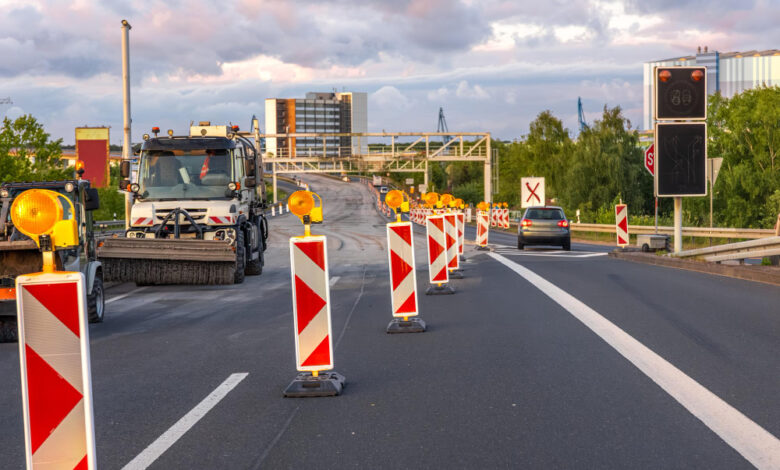
Road markings play an essential role in traffic management, pedestrian safety, and efficient vehicle movement. From highways and urban streets to airports, logistics centers, and industrial parks, clearly defined lines help road users understand lanes, directions, parking zones, and restricted areas.
For contractors and infrastructure companies, road-marking quality depends not only on the coating material but also on the equipment used during application. Reliable machinery helps teams maintain consistent line thickness, accurate positioning, strong surface adhesion, and stable productivity across different working conditions.
Understanding Thermoplastic Road Marking
Thermoplastic markings are produced from a mixture of synthetic resin, pigments, glass beads, fillers, and other performance additives. The material is heated until it reaches a workable molten state and is then applied to the prepared road surface.
A thermoplastic road marking machine controls material heating, mixing, transportation, and application. Depending on its design, the equipment may create flat lines, raised markings, vibration lines, pedestrian crossings, directional symbols, or other traffic-control patterns.
Once applied, the hot material cools and hardens quickly. This makes thermoplastic systems suitable for projects where roads need to reopen soon after marking work is completed.
Why Equipment Selection Matters
Road-marking machinery must provide more than basic material discharge. Temperature stability is particularly important because overheated material may discolor or lose performance, while insufficient heating can create poor flow and weak bonding.
The application system should also maintain a consistent line width and thickness. Uneven output can increase material consumption, create visible defects, and make the finished markings wear at different rates.
Contractors purchasing several types of construction equipment may compare a marking-machine manufacturer with a road roller supplier when planning a complete road-building fleet. Although these machines perform different tasks, both require dependable hydraulic systems, durable frames, accessible maintenance points, and reliable after-sales support.
Key Machine Configurations
Road-marking machines are available in several configurations to match different project sizes and application requirements.
Manual machines are compact, easy to transport, and suitable for parking areas, factory roads, residential developments, and small repair projects. Their simple structure can also make operator training and daily maintenance easier.
Self-propelled models reduce manual pushing and support more stable working speeds. They are commonly selected for municipal roads, larger parking facilities, and projects that require longer continuous lines.
Truck-mounted or large-capacity systems are designed for highways and other high-output operations. These units can carry more material, support multiple application systems, and reduce interruptions caused by frequent refilling.
Important Features for Buyers
The heating system should distribute heat evenly throughout the material tank. Effective insulation can reduce heat loss, lower fuel consumption, and help maintain a stable working temperature during extended operation.
A strong mixing system prevents pigments, fillers, and glass beads from separating inside the tank. Continuous agitation also helps maintain consistent viscosity, which improves material flow through the application shoe.
Line-width adjustment is another important consideration. Contractors handling different projects may need to produce narrow parking lines, standard traffic lanes, wide pedestrian crossings, or customized markings.
Buyers should also evaluate the glass-bead dispensing system. Reflective beads must be distributed evenly while the thermoplastic material is still hot enough to hold them securely. Poor bead distribution can reduce nighttime visibility and shorten the useful service life of the marking.
Productivity and Operating Costs
The lowest purchase price does not always result in the lowest project cost. Fuel efficiency, heating speed, material utilization, maintenance frequency, operator requirements, and spare-part availability all affect long-term operating expenses.
A machine with stable temperature control may reduce wasted thermoplastic material during startup and operation. Consistent application can also lower the need for rework, helping contractors complete more road sections within the available schedule.
Easy cleaning is equally valuable. Residual material can harden inside tanks, valves, pipes, and application components if the equipment is not cleaned correctly. Designs with accessible discharge points and removable parts can shorten end-of-shift maintenance.
Matching Equipment to the Project
Before purchasing, contractors should estimate the average line width, daily working distance, material capacity, surface condition, and required marking type. Local climate and road temperature may also influence equipment configuration and operating procedures.
Small contractors may prioritize portability and simple controls, while highway contractors often need higher capacity, longer operating time, and automated application systems. Municipal buyers may place greater importance on versatility because one machine may be used for streets, crossings, parking areas, and maintenance work.
Supplier Support and Customization
A capable manufacturer should help buyers select the correct tank capacity, heating method, application shoe, bead dispenser, and propulsion system. Custom options may include different line widths, multilingual controls, auxiliary preheaters, enhanced insulation, or configurations designed for specific fuel types.
Technical documentation, operator training, spare parts, and troubleshooting support should also be reviewed before ordering. Good supplier communication can reduce installation delays and help operators use the equipment correctly from the beginning.
Conclusion
Modern road-marking equipment helps contractors improve line accuracy, control material consumption, and complete infrastructure projects more efficiently. By evaluating application requirements, heating performance, machine capacity, maintenance access, and supplier support, buyers can choose equipment that delivers reliable results across a wide range of road-construction and maintenance projects.